
GREEN MIAMI: SUSTAINING PARADISE
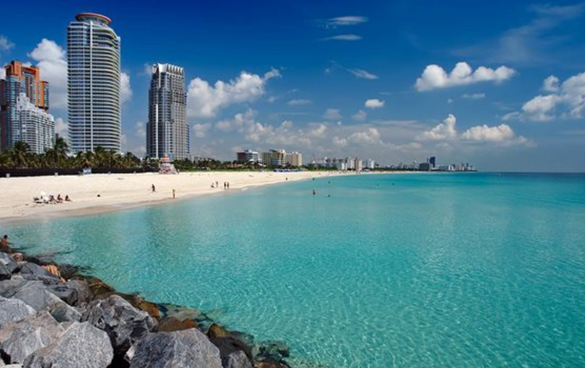
Home to Everglades and Biscayne national parks plus other eco-friendly attractions, Greater Miami & Miami Beach is naturally green. Combine that with a vast array of sustainably minded restaurants, hotels and entertainment venues, and you've got the perfect recipe for an eco-friendly adventure. Living and playing in paradise is a privilege that more and more residents and community leaders are trying to sustain for future generations of locals and travelers. And with Miami's tourism-related businesses putting their best carbon footprint forward, the future looks bright for sustaining paradise.
Miami-Dade County
Municipalities all over Greater Miami
& Miami Beach are working to ensure that paradise is sustained for years to
come. Miami-Dade County's GreenPrint initiative, a massive collaboration between County
staff, community groups, business experts, residents and academic leaders, aims
to significantly reduce the carbon footprint in the region. A cornerstone of
the plan is a commitment to the U.S. Cool Counties Program, which involves
reducing greenhouse gas (GHG) emissions to 80% of 2008 levels by 2050. The plan
also supports the state's goal of achieving 100% of Florida's energy from renewable
sources, with net zero carbon emissions, by that same year. In addition, the
County's Climate Action Plan offers suggestions on how to
combat rising sea levels, reduce GHG emissions, and use water and energy more
efficiently. These are just a few of the more than 130 actions taken by county
government related to sustainability, climate change and environmental
protection, which together are projected to save or avoid millions of metric
tons of GHG in the coming years.
In addition, Miami-Dade County recently
partnered with Florida Power & Light (FPL) to install the nation's first
floating array of solar panels in 2020. Located in the Blue Lagoon near Miami
International Airport, the more than 400 panels generate 160 kilowatts of
power. The two organizations = also launched the FPL Miami-Dade Solar
Energy Center in 2019, where roughly 300,000 panels generate enough
power to supply nearly 15,000 homes. The County has also vowed to plant 1
million trees to achieve a 30% tree canopy. Outside of the area, Miami-Dade
County has linked up with other counties in the region to form the Southeast
Florida Regional Climate Change Compact to mitigate the effects of
climate change and rising sea levels.
City of Miami
In recent years, The City of Miami also
launched a proactive and ambitious environmental program to clean streets and
waterways plus improve air and water quality. Initiatives include Adopt-A-Beach
and Adopt-A-Road projects, Miami's first citywide tree master plan and the
introduction of a "Green Fleet" resolution, requiring as many city
vehicles as possible to operate on hybrid technology or alternative fuels.
The Green Commission brings together a cross-section of local
experts and community representatives to help mold the city's environmental
policy in areas of climate action, green buildings, urban forestry and public
transportation. Miami has forged numerous public-private partnerships to
promote sustainability initiatives, including the World Wildlife Fund, EcoMedia
and the United States Green Building Council. To solidify the city's commitment
to the environment, Miami also formed its first-ever environmental department
known as The Miami Office of Sustainable Initiatives, which
operates the Miami Green Lab, a LEED Gold facility that serves as a
public resource center for green building, energy conservation and urban
agriculture.
In November 2021, the Miami City
Commission voted unanimously to grant final approval of the City's new
comprehensive greenhouse gas (GHG) reduction plan, Miami Forever Carbon Neutral, officially putting the Magic City on a
course to achieve carbon neutrality by 2050. It provides a robust, science-driven,
and implementable action plan to reduce the City's contribution to greenhouse
gas emissions, the root cause of climate change and sea level rise, as well as
strengthen the local economy and enhance climate justice for residents. The
program addresses areas such as getting around Miami, renewable energy,
electric vehicles, energy efficiency and the new green economy.
Other local community organizations are following suit, such as Miami-Dade
County private and public schools, which are doing their part to protect
Mother Earth by practicing green initiatives that conserve energy, cut their
carbon dioxide footprint, and promote environmental awareness. Programs range
from simple recycling and carpooling programs to environmental studies classes.
Local nonprofit Dream in Green has
helped build upon these types of programs in County schools with its Green
Schools Challenge, which provides educators with a complimentary curriculum and
activities on sustainability and climate change. Designed for students in Pre-K
through 12th grade, Dream in Green's programs have already served 340 schools
and more than 90,000 individuals.
Since 2009, one school has exhibited its
extraordinary efforts as a “green high school.” Kendall-based Terra Environmental Research Institute was the county's first
LEED-certified school, offering classrooms equipped with the latest
technological equipment such as multiple computer labs, Promethean boards,
surround sound systems, greenhouses, and state-of-the-art research
laboratories. Inspired by global environmental conservation initiatives and
Science, Technology, Engineering and Mathematics (STEM) programs, the school is
a sanctuary of academic excellence and environmental stewardship. Reflecting
the school board's dedication to sustainability, the county has decreed that
most new schools will be required to be LEED-certified or fall under an
equivalent rating system.
Another exciting initiative to
“greenify” the region is Miami-Dade County's Parks and Open Spaces Master Plan, a 50-year program to create an interconnected system
of public spaces, natural and cultural places, greenways, trails, water paths
and streets. A complementary project is The Underline,
an iconic linear park, urban trail and living art destination on the
underutilized land below Miami's MetroRail. Phase 1, which opened in 2021, is
known as the Brickell Backyard, with outdoor “rooms” for everything from
playing basketball, chess, and soccer to meditating, walking your dog or
wandering butterfly gardens. The next phase is slated to open in 2023.
Similarly, over at Brickell City Centre, a shopping and mixed-use project that opened in 2016, a $30 million trellis of steel, fabric and glass called the Climate Ribbon spans several city blocks. Stretching for 150,000 square feet, the structure serves as an environmental management system that protects visitors from weather, captures the sea breezes to regulate airflow and temperature, collects rainwater for reuse, and allows natural light in to illuminate the area with minimal light fixtures and light bulbs.
TRAVEL GREEN
Whether venturing to or from the region,
the Miami International Airport itself has implemented several
green practices. The Sustainability Project, a joint effort between the
Miami-Dade Aviation Department and FPL, remains the largest energy conservation
initiative in the state, with enhancements like energy-efficient lighting and
heating, ventilation, and air-conditioning (HVAC) system upgrades completed in
2020. Additionally, a new baggage handling system at the airport led to a LEED
Gold certification. Children passing through can also enjoy a Fly Green
Activity Book, which aims to educate youth on the importance of conservation
and sustainable practices.
For those seeking ways to wander in Miami, skip the car in favor of something
more sustainable: public transit. Several systems are in place to help you get
where you need to go, from the Tri-Rail commuter train that
travels up through Broward and Palm Beach counties to the Metromover elevated
people mover, the Metrorail train and the Metrobus.
A free trolley system is also available every day of the week.
Another option for traversing the city is by bicycle. Aside from adding more than 30 miles of bike lanes in recent years, The City of Miami has developed a bicycle-pedestrian mobility plan for the urban Overtown and Wynwood areas; it also launched the Citi Bike share program, which features more than 165 solar-powered stations at which to rent bicycles 24 hours a day.
Miami's accommodations are leading the way in “greenification,” with more than 25 hotels designated as Green Lodging properties through the Florida Department of Environmental Protection's Green Lodging Program. Launched in 2004, the program recognizes hotels, resorts, motels, and bed & breakfasts that have voluntarily implemented environmentally sound policies to protect the fragile Florida environment. They are dedicated to reducing water use, conserving energy, improving air quality, and decreasing solid waste. Participating properties range from the luxurious Four Seasons Hotel Miami and InterContinental Miami in downtown to resorts like The Palms Hotel & Spa. This beachside resort also recently received the coveted Green Globe certification which further adds to its already impressive list of sustainability credentials.
At Loews Miami Beach Hotel,
new tankless water heaters were installed, eliminating the use of large tanks
that hold water and keep it hot even when not being used. The innovative
technology helps reduce wasted energy while also lowering the hotel's carbon
footprint.
The Mandarin Oriental, Miami, long known as one of the area's most
environmentally friendly hotels, also has plenty to offer sustainable
travelers, including retrofitted LED lighting, low-flow faucets and showers,
recycling, an ORCA food composting system, a GLSand machine hat crushes glass
bottles down into sand, an on-site water filtration system, the use of green
cleaning products, charging stations for electric vehicles and seven rooftop
bee colonies that aim to boost the population of these pollinators. Ocean
conservation is also a key component of the brand's green initiatives through
partnerships with Ocean Conservancy and Gulf Wild.
A new, 800-room hotel is set to open in 2023 as well. The Grand Hyatt Miami Beach Convention Center Hotel will combine technological advancements and green practices to create a property that is sustainable in both its daily operations and in times of extreme weather events.
EAT & DRINK GREEN
Miami is all about sensual pleasures,
and the culinary scene is no exception. With a strong Latin influence, Miami is
all about slowing down and savoring life. This philosophy has given birth to
the Slow Food movement in the region, where many restaurants and residents
source as many ingredients as possible from local farmers and fishermen,
supporting both the community and the environment. With dozens of farmers
markets dotted around the region, chefs and locals have many options to access
the freshest produce.
Slow Food Miami, the local chapter of Slow Food USA and
the International Slow Food Association, embraces local growers and artisan
food makers who use sustainable methods, pay fair wages, and respect the
environment. All donations and proceeds from Slow Food Miami events are
used to implement school and community gardens. The organization maintains a
directory of restaurants, bars, food, and beverage artisans that, because of
their contribution to the quality, authenticity, and sustainability of the food
supply of Miami, have been awarded the Slow Food Miami Snail of Approval.
Michael Schwartz of Michael's Genuine Food & Drink in the
Design District was the first celebrated Miami chef to get their Snail of
Approval and has since served as an ambassador to the program to grow
participation; the restaurant also recently earned a Bib Gourmand award from
the Michelin Guide, which says that guests can enjoy two courses and a dessert
or glass of wine for around $49.
Downstairs from Michael's Genuine Food
& Drink, launched by his protégé Alain Verzeroli, lies Le Jardinier,
a vegetable-focused concept that recently earned a Michelin star. With a heavy
use of veggies over animal products, the eatery is already helping the
environment but, where it does use meats and seafood, sustainable options
ensure it is doing its part day in and day out.
Mexican eatery Los Félix was
also awarded a Michelin star for its artistic meals and inviting atmosphere.
The modern Coconut Grove restaurant utilizes a sustainable farming practice
called milpa farming that is popular throughout Mexico and South America,
embracing an ancient tradition of “cultivating the soil with awareness of the
sacred connection between self and land.” The chef, Sebastian Vargas, also runs
nearby Krüs Kitchen. Designed as a virtual kitchen, it is deeply
rooted in sustainability and has already earned a Bib Gourmand rating. Order
delivery or take-out to try seasonal dishes made with South Florida produce,
natural wines, or house-made pantry staples—like honey and salad dressing—that
are crafted in the space.
One way to identify some sustainable
restaurants is to take a peek at Surfrider Foundation's list of ocean-friendly
restaurants, which all help to keep waters healthy by reducing the use of plastic. The
Restaurant at The Palms utilizes mainly local ingredients and
sustainable seafood, along with its anti-plastic practices, but also offers a
few vegetarian and vegan options and has also implemented water conservation
and pollution mitigation efforts. Additionally, Table 55 offers
farm fresh fare ranging from salads, a charcuterie board or the Soup of the Day
to pork ribs, a veggie burger, and a grilled salmon sandwich.
True Food Kitchen in Pinecrest incorporates changing
seasonal menus that follow the anti-inflammatory food pyramid. Dedicated to
sustainability, the restaurant partners only with purveyors whose eco-conscious
thinking aligns with its own; True Food Kitchen even uses environmentally
friendly materials wherever possible, including its chairs, which are made from
100% recycled soda bottles. And we would be remiss not to mention the herb
garden just outside the restaurant used to grow fresh crops for diners.
Sustainability efforts have been front
and center at KYU in Wynwood for years, with the creative
restaurant incorporating several green practices. KYU has an Orca composter to
turn food waste into something useable. The restaurant also participates in a
program called Trees for the Future, which aims to leave a lasting impact on
the planet by giving diners the choice to “purchase” trees to be planted all
over the world. KYU also partners with 1% for the Planet to support the
environment.
You won't find many places like Cervecería
La Tropical, where rainfall is collected to water the plants within the
restaurant and the brewery's spent grain is used for fertilizer. The eatery
also partners with the Fairchild Tropical Botanic Garden to restore Florida's
native orchid plants.
And, at the end of Sunday brunch
at MILA Restaurant, a partnership with Food Rescue US takes center
stage as the restaurant gathers unused ingredients and prepared dishes to
donate to local homeless and women's shelters. This prevents the food from
ending up in landfills, which contributes to the negative effects of climate
change when items decompose and emit greenhouse gases.
Many other eateries around town source
local ingredients as well, such as: Yardbird Southern Table & Bar,
a James Beard-nominated eatery that serves as a tribute to the importance of a
shared meal, utilizing farm-fresh ingredients and classic Southern
cooking; EST.33 Thai Craft Brewery & Kitchen, where the head
brewer sends spent grain to local farmers to use as feed for the animals; Azabu
Miami Beach, which incorporates energy efficient efforts and sustainable
ingredients in its dishes and also recently earned a Michelin star for its
hidden sushi counter, The Den; Full Bloom and Plant
Miami, two 100% vegan eateries that help reduce greenhouse gases with the
animal-free dishes on their menus; and Hoja Taqueria, which gives
back to Mexican farmers to create a supportive and sustainable farm-to-table
cycle.
PLAY GREEN
Back in 2015, the Kaseya Center,
then called the American Airlines Arena, was one of the first two
LEED-certified stadiums in America. Miami's top sports/entertainment venue and
home of the Miami HEAT basketball team, the Center received the prestigious
designation for its progressive renewable energy program, which yields
significant water and energy savings. Additionally, LoanDepot Park,
the home of the Miami Marlins for the last decade, became the first LEED Gold
Certified retractable roof ballpark in Major League Baseball.
Close to the city, golf lovers can also
get on the green train at Trump National Doral Miami, whose
famous courses are certified by the Audubon Cooperative Sanctuary Program for
Golf Courses, in collaboration with the United States Golf Association. The program
is designed to help golf courses protect both their local environment and the
natural heritage of the game.
The LEED-Gold Pérez Art Museum
Miami was the first in the U.S. to use the Cobiax-voided slab
technology that uses 100% recycled plastic with rebar to make concrete slabs,
which allows for fewer support columns and reduces 35% of the concrete used.
The large sheets of glass allow for natural lighting throughout the museum and
the lush vegetation is sustained with rainwater collected in cisterns. The
place is cooled by a state-of-the-art Plenum system that recirculates air
through the ducts in the floors, rather than ceilings, saving a fair amount of
energy. The adjacent Patricia and Phillip Frost Museum of Science,
located in Museum Park on Biscayne Bay, also earned LEED-Gold certification
thanks to things such as the use of natural, non-toxic cleaning supplies;
electric vehicle charging stations; collection of storm water runoff; low-flow
plumbing and irrigation systems; efficient lighting; rooftop solar farm;
recycled building materials and much more.
Another educational spot, the Coral
Gables Museum, is set in a historical building that used to be a police and
fire station. Now a center for all things architectural, urban, and
sustainable, the museum operates a Green City program for K-12 students to
learn about environmental consciousness, sustainable development and more.
Zoo Miami, the largest zoo in the state of Florida, is involved in over 30 global conservation programs while also promoting education on efforts to save wild habitats. The zoo also hosts an Earth Day celebration each year, complete with a scavenger hunt that educates children about helping the environment.
NATURALLY GREEN
While travelers can enjoy the
sophistication and glamour of Miami's urban entertainment, comfortable in the
knowledge that the city is taking aggressive steps to be "clean and
green," they can also rest easy that their playtime in nature is
respectful to the earth.
Eco-adventure tourism is becoming an
important force in Miami, offering many opportunities for responsible
interaction with nature. Miami-Dade County's Parks and Recreation Department
provides naturalist-led Eco-Adventure Tours around the
region's unparalleled ecosystems, from sunrise or sunset kayaking, snorkeling,
and canoeing to biking and hiking tours. They also offer a meaningful sea
turtle awareness program in the summer, where wildlife enthusiasts can learn
about these fascinating and vulnerable creatures and help hatchlings as they
embark on their exciting journey into the depths of the ocean. Or sign up
for the Bees and Butterflies experience, the ocean conservation class, Birding
101, or exploration through archaeology.
The historic Deering
Estate offers canoe trips to Chicken Key as part of the county's
Eco-Adventures program, and hosts The Living Classroom, an environmental
education stewardship center with hands-on curriculum on ecology, geology,
marine biology, archeology, history, and art. The site is a great place to see
endangered pine rockland, forests of hardwood hammocks, mangroves, salt marshes
and rare plants like orchids, bromeliads, ferns and more. A variety of wildlife
such as the gray fox, spotted skunks, squirrels, butterflies and birds can also
be found here. Also, part of the County's eco-tourism programs is the Marjory
Stoneman Douglas Biscayne Nature Center, offering a year-round program of
aquatic and land-based adventures. At the tip of Key Biscayne, more snorkeling,
fishing, and nature walks are on tap at Bill Baggs Cape Florida State
Park, often listed among the top beaches in America.
The County's Fruit & Spice
Park is a lush, tropical paradise with more than 500 varieties of
exotic fruits, herbs, spices, and nuts from throughout the world. Guests can
visit the herb & vegetable garden, take a stroll through a shady banana
grove or become more knowledgeable about poisonous plants. Park staff can
provide expert advice on gardening with fruits, vegetables, and spices, as well
as workshops such as “The Ten Truths of Tropical Fruit” and “Composting.” Fruit
& Spice Park also launched Growfest a few years ago to
showcase all things green and edible.
This is ideal given that the park is
located more than a half hour south of the hustle and bustle of the city, close
to Miami's agricultural region, the Redland. Here in this
agricultural paradise, visitors can spend an entire day sampling
fresh-from-the-farm produce and savoring the exotic fruits and vegetables that
have become the foundation for "Floribbean" cuisine.
Exploring the back roads by bicycle,
locals and tourists often head to The Berry Farm, where sunflower
and strawberry fields await; the property also hosts a farmers' market and
juice bar offering refreshing smoothies. All roads lead to Robert is
Here, another popular pit stop especially for those en route to Everglades
National Park. For over 60 years, the fruit stand has offered guava, lychee,
mamey, mangos and other exotic fruits along with Robert's famous fresh fruit
milkshakes and homemade Key lime pies. In season, visitors can harvest their
own vegetables, loading up on fresh tomatoes, strawberries, zucchini,
cucumbers, and other produce at the many U-Pick farms that line Krome Avenue
and the surrounding streets.
Close to the Redland, many visitors are
surprised to discover that Miami boasts two unusual national parks with endless
ways to appreciate their astonishing natural landscapes. Covering 1.5
million acres, Everglades National Park is the third largest
in the U.S. National Parks system. Made up of sawgrass prairies, mangrove
swamps, subtropical jungle and the warm waters of Florida Bay, the park and its
seemingly endless grassy waters are home to a rare community of plants and
endangered animals. Visitors to the park can enjoy self-guided or ranger-led
tours as well as activities from the Visitor Center at the Park's southernmost
entrance, or journey deeper into the Everglades for a more extensive experience
in the Florida wilderness. The town of Flamingo, 38 miles from the park's main
entrance, boasts a colorful history as the home to hardy pioneers who spent
many years trying to settle the beautifully remote but challenging area. Today,
Flamingo is home to manatees, dolphins and sea turtles plus more than 300
species of birds, including pelicans, egrets, cormorants, bald eagles and
ospreys. And the combination of fresh, salt, and brackish waters makes Florida
Bay the only place on earth where alligators and crocodiles (in this case, the
rare American crocodile) live together.
World-class fishing is one of Flamingo's
irresistible lures. The park's waters provide thousands of acres for fishing:
shallow water flats, channels and mangrove keys are home to snook, redfish,
snapper, trout, largemouth bass, and sea catfish. For those who long to wander,
backcountry camping in the park is an unforgettable experience. Visitors
traveling along the 99-mile Wilderness Waterway can paddle all day without
seeing another soul and spend the night camping out on remote chickees—raised
platform campsites accessible only by water. Permits and reservations are
required and can be made up to three months in advance.
To the north, the Shark Valley entrance
to the park offers one of the best places to observe wildlife. Take a tram tour
or rent a bike to traverse a 15-mile loop. A 65-foot observation tower gives
you a bird's eye view of the River of Grass.
A rarity among national parks, Biscayne
National Park offers 173,000 acres to explore, 95% of which are under
Miami's clear Caribbean blue waters. Teeming with colorful sea life and marine
plants, the park encompasses Biscayne Bay, the longest stretch of mangrove
forest left on Florida's east coast as well as living coral reefs and the
northernmost Florida Keys. At the Dante Fascell Visitor Center, visitors can
enjoy glass bottom boat tours, snorkeling and dive trips, and island
excursions, as well as rent canoes and kayaks. Fishing is excellent, with
snapper, snook and barracuda among the most common catch. Patch reefs provide a
snorkeler's paradise. In shallow waters less than 10 feet deep, the living
coral is home to a variety of sea life including tropical fish, sponges, and
spiny lobster. Playful and curious manatees, dolphins and five species of sea
turtles call the waters of Biscayne Bay home as well, in addition to moray
eels, stingrays, squid, starfish and hundreds of varieties of fish, large and
small.
For a slight change in scenery,
visit Big Cypress National Preserve, where tropical and temperate
plant communities come together to shelter various species of wildlife,
including river otters, bobcats, black bears, endangered Florida panthers and
birds nesting in the cypress trees. Ranger-led activities through The Big
Cypress Institute are also held regularly, varying from biking and birding
experiences to wilderness walks through the prairies and swamp buggy tours.
To venture underwater, divers can
experience wreck diving in one of the largest artificial-reef
programs in the world. Fish flock to the more than 30 ships, tanks, concrete,
limestone, and other structures that have been sunk over the past 25 years off
Miami's coast, as far south as Florida City and north to Sunny Isles Beach.
Most are located just a few miles offshore, in less than 130 feet of water,
providing great diving for all levels. One of the most popular routes is the Wreck
Trek, located off Miami Beach, just north of the Art Deco District. Here,
divers can explore the 85-foot tug Patricia, the 100-foot steel
fishing vessel Miss Karline, and an old radio antenna welded into
19 pyramids. In shallow waters off Key Biscayne, the Half Moon and Germania form
a fabulous underwater archeological preserve. Another popular site is the
Neptune Memorial Reef, where sunken columns, roadways and statues inspired by
the lost city of Atlantis are waiting to be explored. This artificial reef was
created to improve local ocean health by facilitating the expansion of coral,
which many species of marine life need to survive. Natural reefs are also found
off Key Biscayne, Miami Beach, Surfside and Sunny Isles Beach.
The Patch of Heaven Sanctuary is
another green space to enjoy. With guided and self-guided tours available,
visitors can sneak off into nature to explore a forest of tropical hammocks, a
Zen garden, a koi pond and more, The sanctuary which also offers mindfulness,
corporate and Connect with Nature retreats—has worked to restore the hammock
habitat, eliminated invasive plant species, established 10 bee hives to assist
pollinators, rehabilitated and released various species of animals, created a
water source for wildlife and more, all while educating guests on the
importance of preservation and researching threats to the natural environment.
Or opt to unwind at Pinecrest
Gardens, where more than 1,000 varieties of exotic plants, palm trees,
cypress trees and tropical hardwoods come together. Artist-in-residence Xavier
Cortada created the Eco-Art Colonnade at the gardens in 2021. This 200-foot
interactive exhibit combines art and the environment while highlighting
ecological issues in South Florida as well as information on how to help
protect local spaces and the planet. Visitors can also act by pledging
eco-actions, writing letters or adopting endangered animals. The property also
houses a Learning & Sensory Garden for little ones as well as summer camps
and workshops and has previously hosted environmental-themed art contests for
kids.
And, aside from his residency at Pinecrest Gardens, Cortada was recently named the County Artist by Mayor Levine Cava. His previous projects include the Reclamation Project as well as installations at the North and South Poles that address environmental issues; he has been helping educate locals on the importance of conservation for over two decades.
GREEN MEETINGS & EVENTS
The centerpiece of many local events,
tradeshows and conventions is the Miami Beach Convention Center,
which has implemented several green initiatives and structural changes to be
more eco-conscious earning it a LEED-certified Silver rating. A sustainability
committee was created to oversee similar efforts moving forward, and a recent
$620 million renovation has ensured that energy and water consumption are being
reduced thanks to elements like reduced-flow water fixtures in bathrooms,
high-efficiency lightbulbs in meeting rooms (and ample natural light in other
spaces to reduce the need for artificial lighting), sun-shading fins along the
exterior of the building and water bottle refill stations. In addition, the
convention center incorporated the use of eco-friendly ware in on-site food and
beverage venues and turned six acres of concrete into a green space with more
than 1,330 trees.
Held regularly in Miami, the Smart
City Expo shines a light on urban innovation, climate action,
sustainable growth, quality of life and more, revealing a few initiatives to
make the future brighter for those living in the region as well as visiting it.
Marking its 41st anniversary in 2023, Baynanza continues to celebrate the pristine beauty of Biscayne Bay and its ecological system with restoration efforts and beach cleanups at spots like Pelican Harbor Marina, Julia Tuttle Causeway, Matheson Hammock Park, Virginia Key Beach North and more.

No hay comentarios:
Publicar un comentario